Skip to content

The ArrivalIdentity

Rishabh Garg

Software Engineer

About

02 / 06 · street tier

Identity terminal

SPN·01
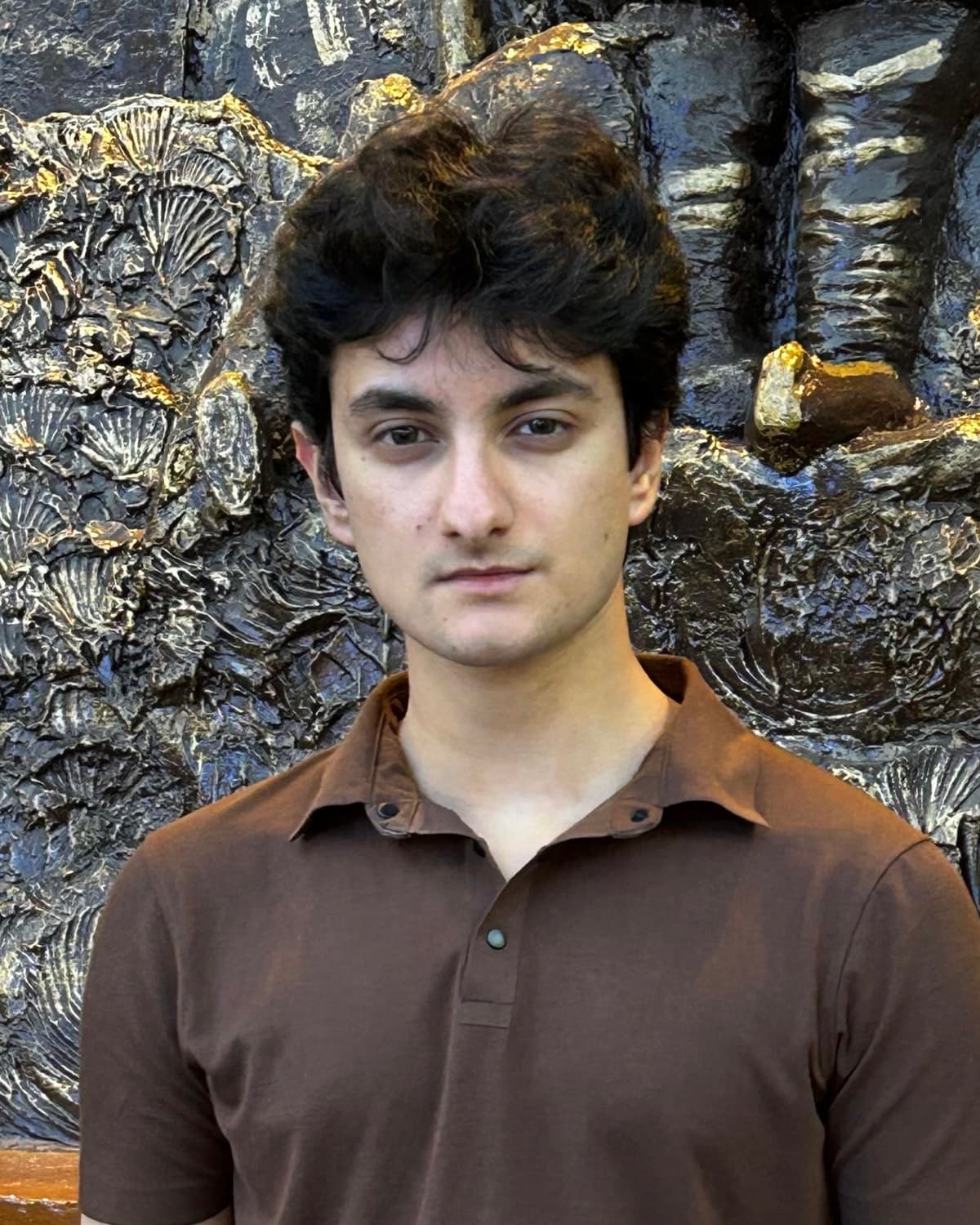
Rishabh Garg
SubjectRishabh Garg

Rishabh Garg

Software Engineer

Origin
Shimla, Himachal Pradesh
Discipline
Computer Science · Artificial Intelligence
Standing
Final year, Thapar Institute
Focus
Machine learning, and networks on real hardware
Languages
English · Hindi
Status
Not currently looking

Résumé

PDF · Updated September 2026

The document itself, exactly as written. No form, no email gate.

I’m a final-year computer science undergraduate at Thapar, specialising in artificial intelligence. Most of what I build sits in one of two places — a model learning something from messy signal, or a system that has to keep a promise while something floods it. I stopped thinking of those as separate interests a while ago.

What I look for in a problem is the point where the documented behaviour and the actual behaviour stop agreeing. On a speech model that meant splitting the data by speaker and watching accuracy fall to a number worth reporting. On a switch it meant scaling the routing table until the upgrade path started dropping packets, then measuring the window. Same instinct both times: don’t inherit the claim, measure it.

Background

Computer science at Thapar Institute of Engineering and Technology, with artificial intelligence as the declared specialisation. The parts I keep reaching for are the ones underneath — data structures, operating systems, computer architecture — because they are what keep the AI half explainable instead of magic.

The rest came from outside the syllabus: transformers down to the attention arithmetic, the sequential models that came before them, and enough RAG, vector databases and fine-tuning to know when a base model is the wrong tool. Then Arista taught me what a protocol does on hardware, which turns out to be a different subject from what a protocol is.

Interests

  • Transformers, end to endThe architecture itself rather than the API over it — attention, positional encoding, the encoder–decoder split — and what actually changes inside a base model when you fine-tune it.
  • Speech and audio modelsSignal that carries more than its transcript — and the evaluation splits that stop you fooling yourself about it.
  • Networks at the silicon levelWhere TCAM entries and CPU queues, not the RFC, decide whether the protocol holds.
  • Systems that explain themselvesContent validated at build, relationships derived rather than drawn. This site is the argument.

Experience

03 / 06 · district tier

Timeline

02 roles

  1. Jun 2026 — Aug 2026 · 3 mo

    Arista Networks

    System Test Engineering Intern

    Two features on Strata-based switching silicon: the route migration that makes a Smart System Upgrade hitless, and the policing that keeps a flood off the control-plane CPU. Both validated at the level where the datasheet stops and the hardware starts.

    Impact

    • Established that the SSU migration held for both address families under route scale, by measuring the packet-loss window across the transition rather than trusting the upgrade path to be transparent.
    • Showed dynamic CoPP genuinely refuses traffic rather than merely existing — the negative cases are the ones that make a protection feature a result instead of a claim.
    • Came away able to reason about TCAM organisation and the Strata packet-processing pipeline directly: what a table write costs, and where classification capacity runs out.

    Remit

    • Tested Smart System Upgrade route migration — IPv4 and IPv6 routes moved out of host routes into the ALPM table during the SSU boot stages, before the control plane flushes routes to hardware, because ALPM downloads to forwarding silicon far faster than the host table.
    • Tested dynamic Control Plane Policing, where ACLs are programmed into hardware to stop the control-plane CPU queues being overwhelmed — at scale, for performance cost, and with negative cases.
    • Read the internal architecture of Arista EOS agents, using IxNetwork and Wireshark for traffic generation and packet-processing verification across L2/L3 protocols.

    Stack

    Arista EOS · Hardware TCAM · L2 / L3 Protocols · Packet Routing · IxNetwork (Ixia) · Wireshark · Network Virtualization

    Areas

    Network systems · Hardware validation · High availability

  2. Sep 2024 — Jun 2026 · 22 mo

    Indian Society for Technical Education (ISTE)

    Web Developer & Event Head

    Executive committee at Thapar. Built the software for the chapter’s flagship tech event, then ran the events it existed to advertise.

    Impact

    • The Colloquium site drove a significant increase in online registrations over the previous cycle.
    • OverThrone became the most successful technical event of the edition.

    Remit

    • Developed the official website for Colloquium, the chapter’s flagship technical event, as part of a small team.
    • Led execution for the technical events, and designed OverThrone end to end.

    Stack

    React · JavaScript · Node.js · Express

    Areas

    Web development · Event operations

02 records

Education

The oldest part of the record, and the foundation everything above it was built on.

Held
6.1 yr
Courses
17
Distinctions
00
Derived
14 skills
  1. Depth 01 · e-thapar

    Integrity 100%

    Aug 2023 — May 2027 · 3 yr 10 mo

    Thapar Institute of Engineering and Technology

    B.E./B.Tech, Computer Science — Artificial Intelligence

    Patiala, Punjab

    Computer science with artificial intelligence as the declared specialisation. The systems half — architecture, operating systems, databases, algorithms — sits underneath the AI half rather than beside it, which is the reason the network work and the model work read as the same discipline here.

    Standing

    CGPA
    9.62
    Specialisation
    Artificial Intelligence
    Standing
    4th year, in progress

    Coursework

    • #01Data Structures & Algorithms
    • #02Object Oriented Programming
    • #03Operating Systems
    • #04Computer Architecture
    • #05Database Management Systems
    • #06Computer NetworksThe theory the Arista internship then made me prove on real silicon.
    • #07Machine LearningWhere the pipeline discipline came from — preprocessing, splits, and evaluation that is not self-congratulatory.
    • #08Neural Networks & Deep Learning
    • #09Natural Language ProcessingEmbeddings, BERT, and the sequence models that came before both.
    • #10Speech Processing
    • #11Generative AITransformer internals and what actually changes when a base model is fine-tuned.
    • #12Cognitive Computing
    • #13Quantum Computing

    Derived

    Data Structures & Algorithms · Operating Systems · Database Systems · Computer Architecture · L2 / L3 Protocols · Machine Learning · Neural Networks · Natural Language Processing · Sequential Models · Speech Processing · Transformers · Python · C / C++ · R

    Each of these is a real edge in the Skill Matrix, drawn because this record is where it came from.

  2. Depth 02 · e-st-edwards

    Integrity 80%

    Apr 2021 — Jun 2023 · 2 yr 3 mo

    St. Edward's School

    CBSE — Senior Secondary, Non-Medical with Computer Science

    Shimla, Himachal Pradesh

    Primary through senior secondary at the same school. Physics, chemistry and mathematics, with computer science as the major elective — the point at which the subject stopped being a school subject.

    Standing

    Class XII
    93.2%
    Class X
    94%
    Stream
    Non-Medical

    Coursework

    • #01Physics
    • #02Chemistry
    • #03Mathematics
    • #04Computer ScienceThe major elective, and the reason the degree was never in question.

Projects

04 / 06 · district tier

AI Labs

04 records

  1. Hybrid Speech Emotion Recognition

    2026

    Primary · Footprint 5 · 7 edges

    Problem
    Speech emotion recognition forces a choice: a small spectrogram CNN is cheap and shallow, a large audio language model is capable and expensive. Picking one means accepting the other’s failure mode.
    Approach
    Build both and let them be different stages rather than competing answers. A four-layer CNN reads 128-band Mel spectrograms for the cheap pass; Qwen2-Audio-7B-Instruct, fine-tuned with LoRA, handles what the spectrogram alone cannot separate.
    Outcome
    The CNN reached ~82.9% validation accuracy on RAVDESS, and the fine-tuned Qwen2-Audio was evaluated on speaker-independent splits — so the number is about emotion, not about having memorised the speakers.
    Flow
    Data → Processing → Model → Training → Evaluation → Output
    Stack
    Python · TensorFlow / Keras · PyTorch · Neural Networks · Speech Processing · Transformers · Machine Learning
  2. ArogyaAI

    2025

    Primary · Footprint 5 · 7 edges

    Problem
    Telemedicine platforms tend to be either a video call with a booking form bolted on, or a symptom checker that confidently tells people they are fine. The first does no triage; the second does dangerous triage.
    Approach
    One platform carrying both, with the safety built into the model’s output rather than the copy around it: symptom-based triage and image-based skin severity classification, each returning a confidence score, each able to escalate to an emergency referral instead of an answer.
    Outcome
    A complete doctor–patient workflow — authentication, scheduling, real-time consultation and digital prescriptions — on a medical-record system that keeps assessments, consultations, prescriptions and transactions as structured records rather than as chat history.
    Flow
    Triage → Classification → Safeguards → Consultation → Records
    Stack
    React · Node.js · Express · MongoDB · JavaScript · WebRTC · Machine Learning
  3. Smart System Upgrade — Route Migration

    2026

    Primary · Footprint 4 · 7 edges

    Problem
    A Smart System Upgrade is only "hitless" if forwarding hardware has every route before traffic resumes. Downloading them as host-table entries is the slow path, and on a box carrying a full table that download time is time the switch is not forwarding the way it claims to.
    Approach
    The feature migrates IPv4 and IPv6 routes out of host routes into the ALPM table during the SSU boot stages, before the control plane flushes routes down to hardware — ALPM downloads to packet-forwarding silicon significantly faster than the host table does. My job was not to build it but to establish that it actually happens: that the migration fires at the right boot stage, that both address families make it across, and that it holds when the table is scaled up.
    Outcome
    Migration verified across the SSU boot stages for both v4 and v6 at scale, with the packet-loss window during the high-availability transition measured rather than assumed — which is the only number that says whether an upgrade was hitless.
    Flow
    Boot stage → Migration → Download → Flush → Verification
    Stack
    Arista EOS · Hardware TCAM · L2 / L3 Protocols · Packet Routing · IxNetwork (Ixia) · Wireshark · Computer Architecture
  4. Dynamic Control Plane Policing

    2026

    Notable · Footprint 3 · 6 edges

    Problem
    The control-plane CPU has finite queue capacity, and anything that can reach it can flood it. When those queues fill, the protocols keeping the switch in the network are the first thing starved — so a box under a control-plane flood does not crash, it quietly stops being a router.
    Approach
    Access control lists are programmed into hardware to police the CPU queues dynamically. I tested the feature three ways rather than one: at SCALE, to find where ACL and TCAM capacity actually runs out; for PERFORMANCE, to see whether policing costs anything when nothing is attacking; and with NEGATIVE cases, because a protection feature that never refuses anything has not been shown to work.
    Outcome
    The feature’s utility established rather than assumed — CPU queue protection holds at hardware scale, and the negative cases confirmed it drops what it is supposed to drop instead of passing everything through.
    Flow
    ACLs → TCAM → Flood → Scale & performance → Negative cases
    Stack
    Arista EOS · Hardware TCAM · L2 / L3 Protocols · IxNetwork (Ixia) · Wireshark · Computer Architecture

Skill Matrix

05 / 06 · district tier

35 skills · 172 links

ConceptsLanguagesLibrariesTools & TechnologiesMachine LearningNeural NetworksTransformersSequential ModelsNatural Language ProcessingSpeech ProcessingData Structures & AlgorithmsOperating SystemsDatabase SystemsComputer ArchitectureL2 / L3 ProtocolsPacket RoutingNetwork VirtualizationPythonC / C++JavaScriptRTensorFlow / KerasPyTorchscikit-learnReactNext.jsExpressDjango REST FrameworkThree.js / GLSLNode.jsSQL — MySQL / OracleDBMongoDBArista EOSHardware TCAMWebRTCIxNetwork (Ixia)WiresharkDockerKVM

Select a skill to trace what it connects to. A line means the two were used together on real work, or are directly related in practice.

Contact me

06 / 06 · network tier

The only structure in the city that points outward. Every line below leaves it.

Uplink holding

Channels
04
Outbound
03

Uplink holding · the city is behind you